AI & Cybersecurity Strategist focused on Maritime Cyber Risk,
Critical Infrastructure, and the Future of Digital Resilience
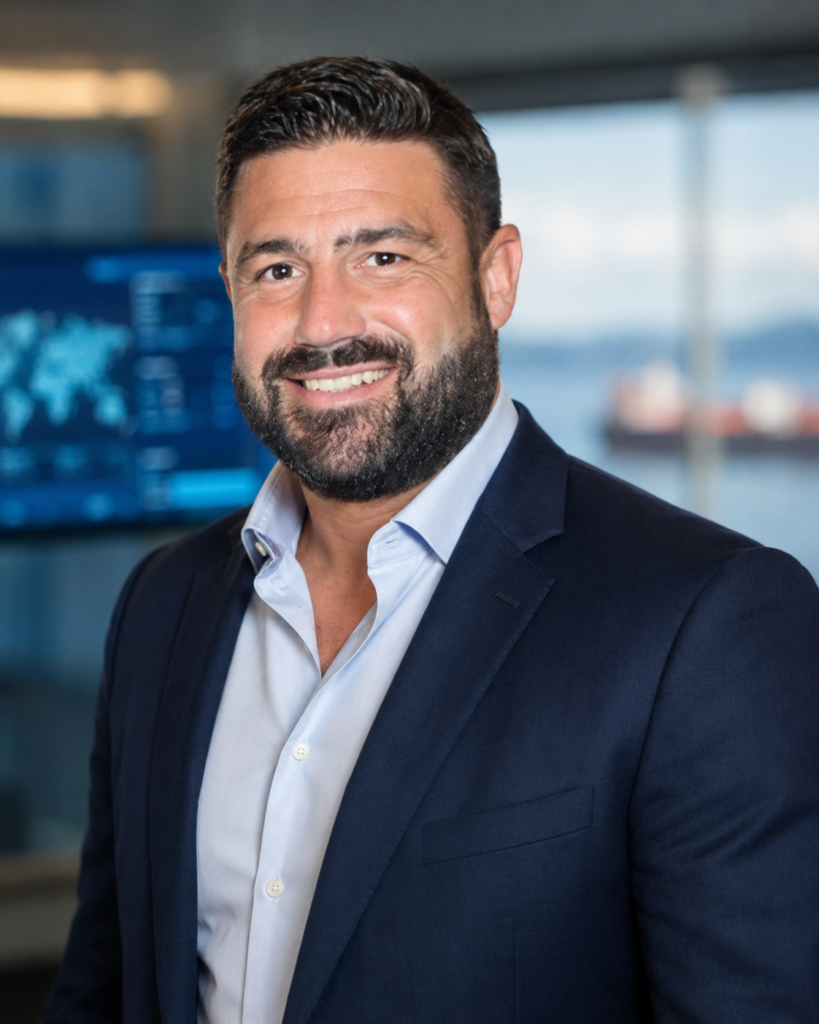
I am Alexandros Engelen.
An AI & Cybersecurity Strategist, entrepreneur, and maritime cyber risk specialist with more than two decades of experience across cybersecurity, offensive thinking, security operations, consulting, customer success, service delivery, and strategic business development.
My work sits at the intersection of cybersecurity, artificial intelligence, maritime operations, and critical infrastructure resilience.
I do not see cybersecurity as a technical department hidden behind firewalls, dashboards, and compliance documents. I see it as a strategic discipline that protects movement, trade, trust, safety, and operational continuity. Nowhere is that more visible than in the maritime industry.
Ships move the world. Ports connect economies. Satellite systems, OT environments, navigation platforms, suppliers, crews, charterers, insurers, and shore-side infrastructure all form one interconnected digital ecosystem. When that ecosystem is compromised, the impact is not limited to data. It can affect cargo, safety, trade routes, energy flows, geopolitical stability, and human lives.
That is the reality I focus on.
My mission is to help the maritime industry understand, prepare for, and defend against the next generation of cyber and AI-driven threats before they become operational crises.
A Cybersecurity Journey That Started Before Cybersecurity Became an Industry
My path into cybersecurity did not begin in a classroom, a corporate training program, or a certification course.
It began in the 1990s, during the early years of the internet, when security knowledge was raw, scattered, underground, and driven by curiosity. Back then, people who truly wanted to understand systems had to explore them deeply. They had to think differently. They had to question how things worked, how they failed, how they could be manipulated, and how fragile digital trust could really be.
That early exposure shaped me permanently.
I come from the original hacker mindset: curiosity, persistence, pattern recognition, technical instinct, and the ability to see what others miss. Over time, that mindset matured into something far more important. The ability to protect organizations, anticipate threats, understand adversaries, and translate technical risk into strategic decisions.
This is one of the reasons I approach cybersecurity differently.
I do not look at a vessel, a port, a network, a supplier, or an operational system only as a consultant reviewing controls. I look at it through the eyes of someone who understands how attackers think. I search for assumptions, dependencies, weak points, trusted connections, human behavior, and hidden paths that could be exploited under pressure.
My early years gave me the mindset.
My professional journey gave me the discipline.
My mission now is to use both to help the maritime industry become more resilient, more prepared, and more difficult to compromise.
From Attacker Mindset to Strategic Resilience
Cybersecurity has changed dramatically over the years, but one truth has remained constant: attackers do not think in departments, policies, or organizational charts. They think in paths.
They look for weak assumptions, exposed dependencies, trusted relationships, human shortcuts, misconfigured systems, and operational blind spots. They do not care whether a weakness belongs to IT, OT, a vessel, a supplier, a port system, a cloud platform, or a third-party service provider. They care whether it gives them access, leverage, disruption, or influence.
This is why I believe modern cybersecurity must be practical, adversarial, and business-aware.
I understand the technical side of cyber risk, but I also understand business pressure, budget constraints, operational reality, customer expectations, regulatory complexity, and the way executives make decisions under uncertainty.
That combination gives me a rare perspective.
I do not believe in cybersecurity that only looks good in a presentation. I believe in cybersecurity that works when the organization is under pressure.
The questions that matter are often simple but uncomfortable:
- What would an attacker actually target?
- Which systems would create the greatest operational disruption?
- Where does the business believe it is secure, but in reality depends on fragile assumptions?
- Which third parties, suppliers, or remote connections could become hidden entry points?
- How can leadership make better cyber decisions before an incident forces them to?
- How can maritime organizations move from compliance-driven security to intelligence-led resilience?
These are the questions that guide my work.
Why Maritime Cybersecurity Matters to Me
The sea has always been part of who I am.
I have spent my life connected to water, discipline, endurance, and the mindset that the sea demands: respect, awareness, preparation, humility, and calm under pressure. That same mindset defines how I approach cybersecurity.
The maritime industry is not just another sector to me. It is one of the foundations of global civilization.
Every vessel, port, terminal, fleet, supplier, communication link, satellite dependency, bridge system, and shore-side platform is part of a much larger operational chain. The industry is becoming more connected, more automated, more data-driven, and more dependent on digital trust. At the same time, adversaries are becoming faster, more creative, and more capable.
Maritime cyber risk is no longer theoretical.
It includes ransomware against ports and shipping companies, GNSS jamming and spoofing, AIS manipulation, OT exposure, bridge system vulnerabilities, supply-chain compromise, satellite communications risk, vendor access abuse, AI-assisted deception, and hybrid threats that combine cyber, electronic warfare, geopolitical pressure, and operational disruption.
These threats cannot be understood only through technical checklists.
They must be understood through the reality of maritime operations: vessels at sea, crews under pressure, ports handling critical flows of goods and energy, suppliers connected across borders, and executives responsible for continuity, safety, reputation, and compliance.
My goal is to help maritime leaders see these risks clearly.
Not through fear. Through intelligence, clarity, and practical action.
What I Do
Through my writing, advisory thinking, research, and entrepreneurial work, I focus on helping the maritime ecosystem understand how cyber and AI risks are changing.
My areas of focus include:
- Maritime cyber risk strategy
- AI-enabled cyber threats
- Vessel compromise scenarios
- Port and terminal cybersecurity
- OT and bridge systems risk
- Satellite communications and GNSS dependency
- Supply-chain cyber attacks
- Threat modeling for maritime environments
- Cybersecurity governance, risk, and compliance
- Security awareness for shipping organizations
- Critical infrastructure resilience
- AI-driven security and risk intelligence products
I write and publish independent maritime cyber analysis through my own platform, including threat briefings, practical breakdowns, and strategic commentary designed to support awareness, decision-making, and resilience across the global shipping industry.
My goal is not simply to report cyber threats. My goal is to translate them.
To explain how they work, why they matter, who they affect, what they reveal about the industry, and what maritime organizations should do before the next incident.
My View of the Future
The maritime industry is entering a new era.
Ships are becoming floating digital ecosystems. Ports are becoming smart infrastructure nodes. AI is entering operational planning, logistics, compliance, intelligence, maintenance, decision support, and cyber operations. Attackers are also adopting AI, automation, and hybrid tactics.
This creates a new challenge for maritime leaders.
The next major cyber risk will not always look like a traditional hack. It may look like a false position, a corrupted supplier, a trusted remote access channel, a manipulated document, a compromised port system, a silent OT weakness, an AI-generated deception, or an operational decision based on data that can no longer be trusted.
In this environment, cybersecurity can no longer be reactive. The maritime industry must evolve toward predictive resilience.
That means understanding attackers before they arrive. Mapping operational dependencies before they fail. Protecting vessels, ports, suppliers, and shore-side infrastructure as one ecosystem. Treating AI as both an opportunity and a risk. Building cyber programs that are realistic, measurable, and operationally useful. Moving cybersecurity from the IT room to the bridge, the boardroom, and the entire maritime value chain.
This is where I want to contribute.
I want to help shape a maritime industry that is not only more connected, but more aware, more resilient, and more prepared for the threats already forming over the horizon.
My Character and Professional Philosophy
I am driven by curiosity, intensity, discipline, and a deep need to understand what others overlook.
I value trust, direct communication, loyalty, and practical results. I prefer honest analysis over comfortable assumptions. I believe that real expertise is not about using complex language to impress people. It is about making complex risk understandable enough for people to act.
My background has taught me that cyber resilience is not built by tools alone.
- It is built by people who ask better questions.
- People who prepare before the crisis.
- People who are willing to challenge assumptions.
- People who understand that security is not a checkbox, but a continuous responsibility.
I bring that mindset into everything I do.
Why This Platform Exists
alexandrosengelen.com is my independent platform for maritime cyber risk, AI security thinking, and strategic analysis.
It exists to create a stronger public voice around the risks that matter most to shipping, ports, vessels, suppliers, executives, and critical infrastructure stakeholders.
It is a place where I share analysis, ideas, warnings, frameworks, and perspectives on how the maritime industry can protect itself in an age where cyber threats, AI, electronic warfare, and geopolitics are increasingly connected.
This platform is also part of a larger personal mission: to build, support, and promote technology initiatives that strengthen the maritime industry through cybersecurity, artificial intelligence, risk intelligence, and operational resilience.
The maritime sector does not need more noise.
- It needs clarity.
- It needs people who understand both the attacker and the operator.
- It needs practical cyber intelligence that can be understood by the boardroom, the bridge, the SOC, the port, and the people responsible for keeping global trade moving.
That is the work I am committed to.